
Efficiency enhancement and voltage stabilization, an indispensable PFC chip in energy storage equipment
For energy storage devices, charging and discharging are their basic functions, but there may be energy loss during this process, leading to a decrease in overall energy efficiency. At the same time, the dynamic response characteristics of energy storage systems may not be guaranteed, leading to a decrease in overall stability and also prone to overload. The power factor correction (PFC) controller chip was born to solve these problems, and for current energy storage devices, PFC chips are also an important component.
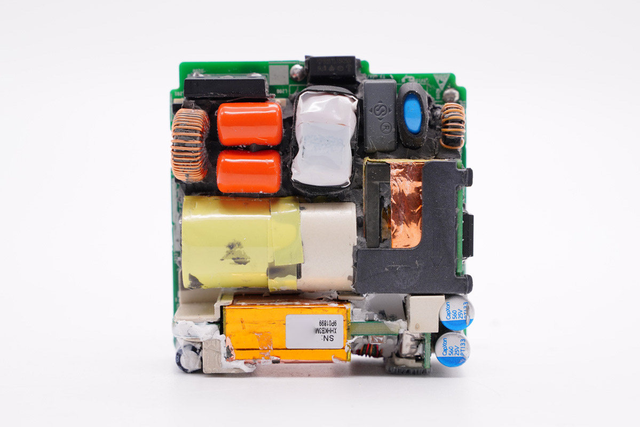
How does PFC chip work?
The working principle of PFC chips in energy storage is mainly based on active power factor correction (APFC) technology, which adjusts the phase relationship between current and voltage in the circuit to improve the efficiency of energy use and reduce the burden on the power grid. Simply put, PFC chips play an important role in energy storage systems by controlling input current, stabilizing DC bus voltage, adjusting dynamic response, and providing protection functions.
The so-called power factor refers to the ratio of effective power to apparent power in the power system, which is an important indicator for measuring the efficiency of electricity utilization. Generally speaking, this ratio should be close to 1, indicating a higher efficiency in electricity utilization and lower energy loss.
Specifically, the operation of PFC chips can be divided into several steps. Firstly, there is rectification and filtering. The alternating current is converted into direct current through a rectifier, and then high-frequency noise is removed through a filtering circuit. Then use BOOST circuits or other topology structures to increase the voltage to the desired level. The BOOST circuit is simple and efficient, providing a certain level of boost capability.
At the same time, the PFC chip adjusts the current in the inductor to follow the voltage waveform by controlling the conduction and closure of the switching transistor, thereby achieving power factor correction. Usually, an inductor is connected after the full bridge output as an energy storage element, used to store and release energy to stabilize the output voltage.
Some advanced PFC solutions adopt digital control, such as the digital control PFC solution based on STM32G4, which can improve the intelligence level and performance of the system. To improve efficiency, wide bandgap devices (such as SiC or GaN) can be used, which have good reverse recovery characteristics, helping to reduce conduction losses and improve efficiency.
Therefore, the role of PFC chips in energy storage systems is to ensure the effective utilization of electrical energy and the efficient operation of equipment, while also helping to meet relevant power standards and regulatory requirements. Through this approach, energy storage devices can not only better serve users, but also reduce the pressure on the power grid.
Moreover, PFC chips can reduce the ineffective loss of electrical energy by improving power factor, enabling energy storage devices to use electrical energy more efficiently during charging and discharging processes. This is particularly important for portable energy storage devices, as they often require long-term operation without an external power source.
The performance of energy storage devices depends not only on their energy storage capacity, but also on their efficiency and impact on the power grid. The use of PFC chips can improve overall performance and make energy storage devices more competitive in the market.
PFC chip solutions in the market
In the 1990s, Professor Erickson and others from the University of Colorado in the United States proposed the concept of a single-stage PFC converter, aimed at reducing the number of components, lowering costs, and improving efficiency by combining the MOSFETs of the pre boost circuit and the subsequent Flyback or Forward converter.
With the development of power electronics technology, PFC technology has been widely applied, especially in fields such as power, metallurgy, chemical industry, coal, communication, and household appliances. Many PFC chip companies have also emerged in the market, providing solutions for various scenarios.
For example, major companies such as ST, TI, PI, Infineon, and Ansemy all have corresponding solutions. Domestic enterprises also have corresponding excellent solutions, such as BP2628 from Jingfeng Mingyuan, which supports critical continuous mode or intermittent mode and can achieve zero current shutdown of diodes, helping to improve conversion efficiency and reduce electromagnetic interference.
And BP2628 also comes with comprehensive protection functions, including cycle by cycle overcurrent protection, output overvoltage protection, chip power supply undervoltage protection, feedback pin short circuit protection, chip internal overheating protection, and other protection functions, ensuring reliable system operation. At the same time, the feedback pin short circuit protection function can be used for PFC level switch control to reduce the standby power consumption of the system.
Nanxin Technology has previously launched a PFC control chip SC3201, which can meet the requirements of medium and high-power chargers and adapters for power factor and input current harmonics. This scheme also has core technologies such as no need for auxiliary windings, integrated THD optimization, and support for segmented output.
The KP2806A, launched by BiYi Microelectronics, is a high-performance, quasi resonant (QR) boost constant voltage PFC chip that can adaptively operate in critical conduction mode (CRM) and intermittent conduction mode (DCM). It adopts SOT23-6 packaging and can occupy less PCB space through multi-functional pin multiplexing.
The MT9570 from Meixin Sheng is characterized by optimized total harmonic distortion (THD) performance, making it easy to achieve PF>0.99, THD<5% @ full load/AC230V, meeting the IEC61000-3-2 standard. At the same time, the system solution supports dimming applications, with THD<6% at 50% load and THD<20% at 10% load. At the same time, the chip integrates EN standby function to achieve ultra-low standby power consumption, and the static current can be as low as 13uA.
Xinpeng Micro has also launched a highly integrated totem pole bridgeless PFC digital analog hybrid control chip PN6811, which uses constant conduction time control to achieve high power factor. The system operates in the CRM/DCM state, with a simplified periphery and omitted rectifier bridges to improve efficiency and reduce heat generation, making it very suitable for applications with high efficiency and high power density requirements.
Of course, there are many PFC solutions in the market, and with the popularization of third-generation semiconductor materials, such as GaN switching tubes and SiC diodes, PFC can improve work efficiency, reduce the volume of PFC boost inductors, and improve power density.