
Enter the magical world and explore the "transmutation" process of electronic components, turning ordinary into extraordinary
Electronic components are the silent cornerstones of modern technological civilization. They are like sprites in the microcosm, quietly driving every innovation from smartphones to spacecraft. In today's digital era, the importance of electronic components is self-evident. They are not only the lifeblood of the information society, but also the embodiment of human wisdom. Looking back at history, the evolution of electronic components is like a silent revolution. From simple resistors and capacitors to complex semiconductor chips, every leap forward embodies the painstaking efforts of countless engineers. This article will take you into this magical world, explore how electronic components transform from ordinary materials into technological treasures through the "alchemical" process, and look forward to the infinite possibilities of their future development.
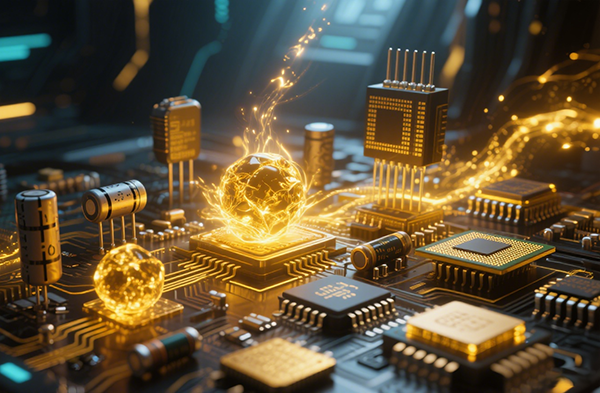
The origin of electronic components can be traced back to the end of the 19th century, when the invention of telegraph and telephone gave birth to the first passive components, such as resistors and capacitors. These early components, though simple, sowed the seeds for the subsequent electronic revolution. By the mid-20th century, the advent of the transistor marked the birth of active components, replacing bulky vacuum tubes and making miniaturization of electronic devices possible. Subsequently, the emergence of integrated circuits further integrated multiple transistors onto a tiny silicon wafer, forming the prototype of semiconductor chips. Semiconductor materials, such as silicon and germanium, have become the core of electronic components due to their unique conductive properties. Silicon is abundant in the earth's crust. Ordinary-looking sand, after being refined, can be transformed into high-value chips, which is a modern interpretation of "turning stone into gold". This process not only requires superb craftsmanship but also relies on breakthroughs in materials science, such as adjusting the conductivity of semiconductors through doping technology to manufacture basic components like diodes and transistors.
With technological advancements, the types of electronic components have become increasingly diverse, ranging from analog devices to digital devices, and further to mixed-signal chips, each playing a unique role. Taking semiconductor chips as an example, they can be categorized into memory chips, logic chips, and microprocessors, among others. Memory chips are responsible for data storage, such as DRAM and NAND flash memory, which enable computers to quickly access information; logic chips handle computational tasks, such as CPUs and GPUs, serving as the "brain" of modern smart devices. The manufacturing process of these chips is akin to art, involving multiple steps such as lithography, etching, and deposition. Lithography technology is particularly crucial, utilizing ultraviolet light to etch circuit patterns onto silicon wafers with precision down to the nanometer level, akin to carving an entire city onto a strand of hair. This level of precision demands a dust-free environment and high-precision equipment, making chip factories one of the cleanest places in the world. The etching process removes excess material through chemical or physical methods to form three-dimensional structures, while deposition techniques cover thin film layers to protect the circuits. The entire process requires repeated optimization to ensure stable performance in every chip.
Electronic components are ubiquitously applied, silently supporting modern life from daily household appliances to high-end medical equipment. In the field of communications, radio frequency chips enable wireless signal transmission; in the energy industry, power semiconductors facilitate efficient conversion of electrical energy in solar inverters; in the automotive industry, sensor chips enable perception functions for autonomous driving. These applications not only enhance efficiency but also promote sustainable development. For instance, energy-saving chips can reduce equipment power consumption and carbon emissions, echoing the global environmental protection trend. However, the development of electronic components also faces challenges, such as material bottlenecks and manufacturing complexity. Although silicon-based chips dominate the market, their physical limits are approaching, and researchers are exploring new materials, such as carbon nanotubes or two-dimensional materials, to break through the limitations of Moore's Law. In addition, supply chain issues also remind us that independent innovation in electronic components is crucial.
In the future, electronic components will evolve towards intelligence and integration. The rise of artificial intelligence chips has endowed devices with learning capabilities, while IoT chips connect everything to build smart cities. Quantum chips, though in their infancy, have the potential to disrupt the existing computing paradigm. These advancements are inseparable from interdisciplinary collaborations, such as bioelectronics, which combines components with living organisms to develop implantable medical devices. It is worth noting that the design of electronic components is increasingly focusing on reliability, ensuring their stable operation in extreme environments through simulation testing and fault analysis. For ordinary consumers, understanding this knowledge can help them choose high-quality products and avoid equipment failures caused by inferior components.
In summary, electronic components are not merely technological products, but also serve as a bridge for human exploration of the unknown. From the miraculous creation of gold from stone to their seamless integration into daily life, they embody the fusion of technology and humanity. Electronic components will continue to write legends, guiding us towards a smarter future.